 ✦ Home हिन्दी में पढ़ें
  by The Mystical Universe Team · September 5, 2026 · 8 min read
Water is considered to be the essence of life, something all living creatures depend on for survival. But what if you were told that water is more than just a resource that is used to drink, bathe, or perform other activities? Recent experiments on water are claimed to have revealed some groundbreaking possibilities, suggesting that water may be sentient, may respond to stimuli, and may even have the memory of the objects that it comes into contact with.
While this may seem to be far-fetched and arouse skepticism in many of us, there have been many experiments conducted on water whose authors describe their results as groundbreaking. We are not endorsing these claims or drawing conclusions; we are simply reporting them. Let's now explore the mysteries said to surround water. The concept of the "memory of water" first arose in the laboratory of the eminent French scientist Jacques Benveniste in 1988. In a controversial study published in the journal Nature, Benveniste claimed that water could remember an antibody after being so diluted that the original molecule had left. In other words, the theory expounded that water could retain the memory of the substances dissolved in it even after extreme dilution. This experiment initially focused on homeopathic remedies, which involve diluting substances in water to the point where no molecules of the original substance remain. Benveniste's team argued that water might retain the molecular imprint of the original substance, allowing the remedy to still have an effect.

While researchers were still debating the validity of Benveniste's experiments, another scientist from across the world came up with what his followers call an astonishing discovery. Dr. Masaru Emoto, a Japanese scientist, collected tap water and froze it. He then examined the samples under a microscope and photographed them. He then collected water from nearby lakes and rivers and exposed them to different words and music. He then froze the samples, and the results that were obtained were described as groundbreaking. The water in the jars that were exposed to positive words like "Thank You" and "Peace" formed beautiful snowflake-like crystals, while the ones exposed to words like "You make me sick" and "I will kill you" led to deformed crystals. He believed his research showed that water not only collects information but is also sensitive to feelings and consciousness. Mainstream science has not accepted these findings, but the images continue to fascinate millions.
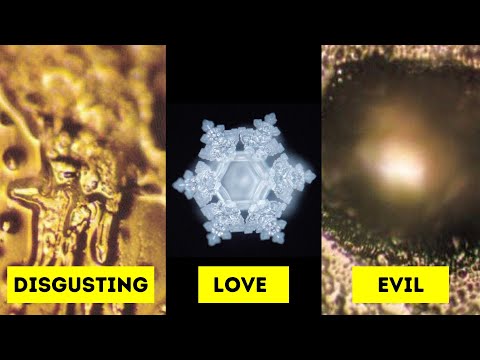 Water Has Memory! Dr. Masaru Emoto's Water Experiment
Watch on YouTube: Water Has Memory! Dr. Masaru Emoto's Water Experiment
Another remarkable claim on the "memory of water" came from researchers at the aerospace institute at the University of Stuttgart. With the aid of a special microscope and camera, a group of scientists devised a way to make the molecular structure of water visible. This captivating experiment reportedly showed that water, collected from the same source, produced the same pattern when it was placed on the tray by the same student, and different patterns when it was placed by different students. The researchers also added flowers to the water and said they noticed distinct patterns, which they saw as showcasing the ability of water to retain and reflect external influences. Furthermore, as they traveled along the Rhine, they reported that water collects information from its environment, transforming from its original state to something enriched by its journey. This notion propounds that the world's oceans could serve as vast repositories of information, indicating, if it were ever proven, that water is more than just a mere physical substance.
In 2008, during a time of personal change, loss, and deep grief, photographer Rose-Lynn Fisher found herself shedding countless tears. One day, she wondered if tears of sorrow might look different from tears of joy. This curiosity led her to examine them under a microscope. Studying 100 different types of tears, she discovered striking differences - basal tears, which keep our eyes lubricated, looked nothing like the ones produced when chopping onions. Tears from uncontrollable laughter were entirely distinct from those shed in sadness. Much like a drop of ocean water, each tear holds a tiny world of human experience.
How Water Memory Could Affect Human Health
If water has memory, its consequences for human health could be quite profound. Making up more than 60 percent of the human body, water is vital for life. From hydration to nutrient transport to waste removal, each cell, organ, and system relies on water for correct function. New insights into human health, behavior, and even healing could come about if the understanding of how water memory could influence these processes deepens. The four ideas below are speculative possibilities discussed by proponents of water memory; they are not medical facts, and none of them should influence anyone's health decisions.
1. Hydration and Cellular Function
The memory of water, if it existed, might impact communication between cells. In the human body, water aids in transporting nutrients and eliminating waste, but it also contributes to signaling within cells. If water had the ability to "remember" previous interactions or materials it has encountered, proponents suggest it could influence how it interacts with cells. For instance, water that has interacted with specific substances, such as toxins or pollutants, might carry a trace of those substances, impacting cellular functions even when the substances themselves are no longer present in the body. This, they speculate, could result in modified immune responses, inflammatory reactions, or alterations in how cells handle nutrients.
2. Homeopathy and Alternative Medicine
Homeopathy, a type of alternative medicine, operates on the idea that water can retain the essence of substances even after being diluted to a point where no molecules remain. If water does have memory, this notion could lend scientific credibility to homeopathic practices. Supporters argue that water's capability to store information might clarify why homeopathic treatments seem to them to produce beneficial effects, despite the absence of active ingredients. This concept, its advocates believe, holds the potential to transform our approach to healing, indicating that water could be utilized to address health issues through specific energetic signatures rather than through chemical elements.
3. Toxin Removal and Detoxification
If water could hold a "memory" of toxins, it may suggest that its role in detoxification is more intricate than previously understood. Consuming clean water is crucial for expelling harmful substances from the body; however, if water retained traces of former toxins or contaminants, believers argue it might impact the efficacy of detoxification methods. On the other hand, water that has been "charged" with healing qualities, whether through specific structuring or positive influences, could, in their view, potentially boost the body's ability to remove toxins more effectively, leading to improved overall health. No such effect has been demonstrated in medical research.
4. Psychosomatic Effects

The concept of water's memory could also touch the connection between the mind and body. Some supporters of water memory suggest that our emotional states might alter the quality of water within us. Much like the growing interest in how positive and negative thoughts impact the human body, they consider it possible that water - being a vital component of our physical makeup - might "capture" the energy or emotional impressions we encounter. If water held onto memories of feelings or external influences, this could, in their telling, affect mental well-being, possibly providing fresh perspectives on understanding and tackling stress, trauma, and other emotional difficulties.
The Environmental Impact of Water Memory
The concept of water memory would not only have possible effects on personal health but could also have important environmental ramifications. If water were capable of retaining the memory of pollutants, chemicals, or other harmful substances, it would lead to worries about the ongoing quality of water supplies. This would be particularly crucial in regions where water pollution is frequent. Even after contaminants have been eliminated from the water, its "imprint" might persist, influencing ecosystems and human communities for many generations.
Moreover, the idea of water memory could transform our understanding of pollution and the purification of water. Conventional purification approaches, including filtration and chemical treatments, might fall short if water held onto the memory of toxic substances. Innovative methods for "resetting" or "purifying" water might then become essential for safeguarding the quality of water resources for future generations. All of this, we stress, remains hypothetical.
Ethical and Societal Considerations
The revelation of water memory, if it ever came, would also bring forth significant ethical and societal dilemmas. If water truly possessed memory, how should we approach its utilization across various sectors, especially in agriculture and healthcare? Should we regard water as a precious resource that requires careful management due to its ability to hold imprints from harmful substances, medications, or even emotional influences? Furthermore, the consequences of employing water memory in therapeutic applications - such as in homeopathy or other healing practices - would need thorough investigation regarding their effectiveness, safety, and ethical implications.
Conclusion
The idea of water memory, while still a topic of significant debate and firmly outside accepted science, presents fascinating possibilities for human health, environmental sustainability, and alternative therapies. If water could genuinely hold traces of the substances and energies it has come into contact with, it would alter our perspective on hydration, detoxification, and healing. This concept might also have significant consequences for our strategies regarding water management and environmental protection. Although nothing here has been proven, and much of it has been contested, the continuing fascination with water's potential memory keeps alive an intriguing question about the most vital resource on the planet. We leave the conclusions to you.